
Agarose hydrogel as controlled moisture delivery system for starch-based water-activated tape (WAT) removal on Masonite-type fiberboard

1 Painting Conservation Laboratory, Science Conservation Centre for Art (SCICCA), Faculty of Science, Chulalongkorn University, Bangkok, Thailand.
2 Science for Industry (Sci-Fi), School of Integrated Science, Faculty of Science, Chulalongkorn University, Bangkok, Thailand.
Abstract: Masonite-type fiberboards, widely adopted by modern and contemporary artists as painting supports since the 20th-century, are complex engineered lignocellulosic substrates that present significant conservation challenges. Their sensitivity to moisture complicate treatments involving aqueous systems, particularly the removal of starch-based water-activated tape (WAT), which strongly interact with the porous structure of the board. In this context, the controlled delivery of moisture and moisture extraction is critical. This short note from a case study explores the use of a gel-based system to enable localized and precise moisture application, minimizing structural damage while facilitating safe WAT removal.
Keywords: hydrogel; agarose; Masonite fiberboard; adhesive removal; painting conservation.
This post is intended primarily for conservators and includes some technical detail that may be unfamiliar to general readers.
1. A highly engineered composite wood substrate
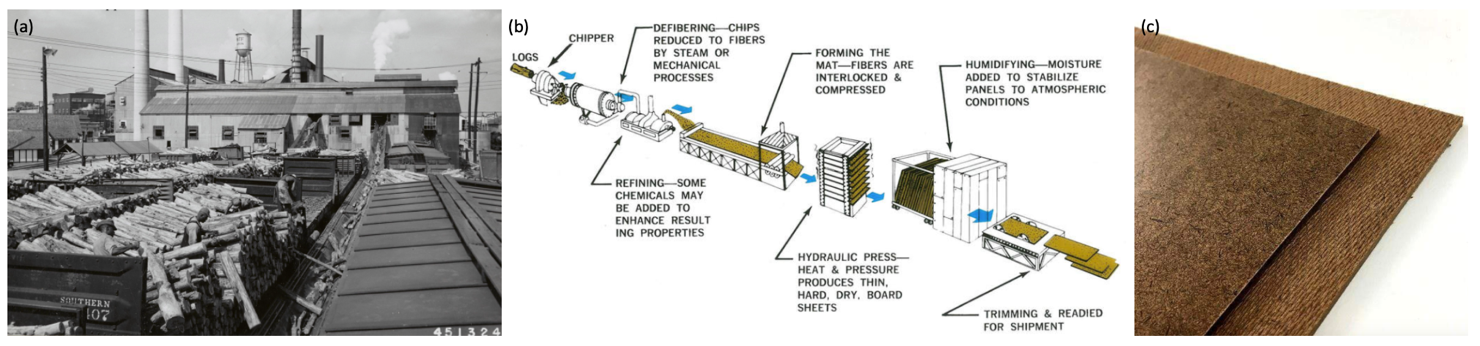
Masonite-process board is a specific brand of hardboard (high-density fiberboard) manufactured via thermo-mechanical defibration process from wood particles subjected to high-pressure steam, which softens the lignin by inducing autohydrolysis and fiberizes the material. The resulting fibers are then compressed under heat, forming a hard and rigid board in which lignin (typically 20-30 wt%) [1] acts as a natural binding agent [2], in contrast to other similar panels from others manufacturers that rely on formaldehyde-containing adhesives (Yuan et al., 2022) [3]. Masonite fiberboard panels are characterized by a textured reverse surface, resulting from the use of a screen during hot pressing, referred to as S1S (smooth one side), which facilitates vapor permeability and the evacuation of steam and water [4].
Industrial production patents describe several processes, one of the earliest dating back to 1926, developed by William H. Mason in the United States under the Masonite Corporation [5] a manufacturer that continues to be one of the world’s major producers of fiberboard today. Following the industrial and commercial expansion of the early 20th-century, Masonite-type fiberboards were progressively adopted by modern and contemporary artists as a painting support from the 1930s onward [2].
2. Valued by artists despite conservation issues
Masonite-type supports, while widely valued by modern and contemporary artists, present significant conservation challenges due to their lignocellulosic composition and heterogeneous microstructure. The high lignin and hemicellulose content renders these substrates inherently susceptible to chemical and biological related degradation, moisture-related dimensional instability, and environmental stressors [6]. These vulnerabilities are further compounded by interactions with artists’ and framing materials.
3. The removal of starch-based water-activated tape (WAT)
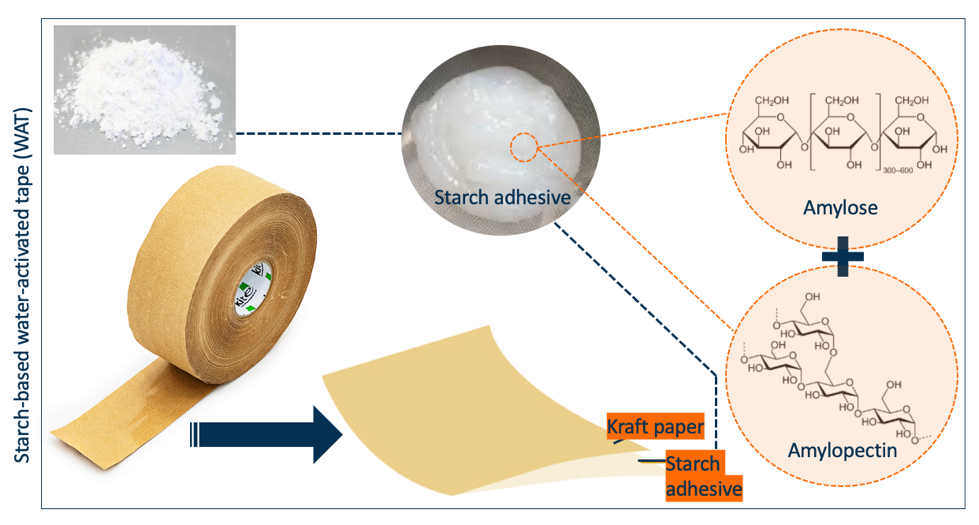
In particular, the removal of WAT is challenging, as these polysaccharide adhesives, composed of α-D-glucose units (amylose and amylopectin) bearing abundant hydroxyl (–OH) functionalities capable of extensive hydrogen bonding [7], readily penetrate the porous and polar fiberboard matrix and establish strong physicochemical interactions [8]. The application of moisture required for starch-based adhesive reactivation may induce heterogeneous swelling and subsequent shrinkage during drying, generating internal stresses, planar distortions, and potential delamination.
These effects are further exacerbated by the presence of lignin within the Masonite matrix. Due to its amphiphilic and heterogeneous structure, lignin contributes to moisture sorption and facilitates water diffusion, promoting fiber swelling, matrix softening, and the migration of low-molecular-weight degradation products. Repeated wetting-drying cycles accelerate oxidative and hydrolytic degradation processes, leading to progressive mechanical weakening and dimensional instability [6].
4. The necessity of a gel-based system for controlled moisture delivery
Precise control of moisture delivery is therefore essential. In the treatment of a contemporary painting on a Masonite-type substrate at the SCICCA Painting Conservation Laboratory, a combined approach integrating localized hydrogel-mediated moisture application with controlled mechanical intervention and suction device was implemented.
An agarose hydrogel (Molecular Biology grade agarose, GeneON GmbH, Groß-Rohrheim, Germany), a polysaccharide-based gel system made up of the repeating unit (400-500 units) of agarobiose [9,10], widely used in conservation for its ability to deliver confined and controlled amounts of aqueous solution was prepared at 4% (w/v) in deionized water (pH 7.1, RCI Labscan, Bangkok, Thailand) under heating cycles until complete dissolution, followed by gelation upon cooling. The hydrogel was conditioned at 4 °C for 24 h prior to use. This agarose concentration was chosen to ensure structural stability of the gel (denser network) and diffusion-controlled moisture release, thereby limiting excessive water penetration into the substrate [10].
The gel was then sectioned into 4 × 4 cm pads and applied to the surface, enabling spatially confined moisture delivery through restriction of bulk water flow and diffusion-controlled transport. This facilitated softening of the paper and adhesive under ambient conditions (~25 °C and ~41% RH). The gel was applied in contact without pression for ~30 seconds, depending on the surface area and thickness of the WAT layers. Subsequent mechanical action at 180° facilitated the gradual removal of the WAT in successive layers. The procedure was repeated two to three times as required, followed by localized extraction of residual moisture, gel residues and solubilized adhesive using a suction device operating at 880 rpm for ~60 seconds (modified Rocker 400 Oil Free Vacuum Pump, Japan). The treatment was visually assessed under standard visible illumination (white light, ~400-700 nm, ≈5000-6500 K), enabling continuous monitoring.
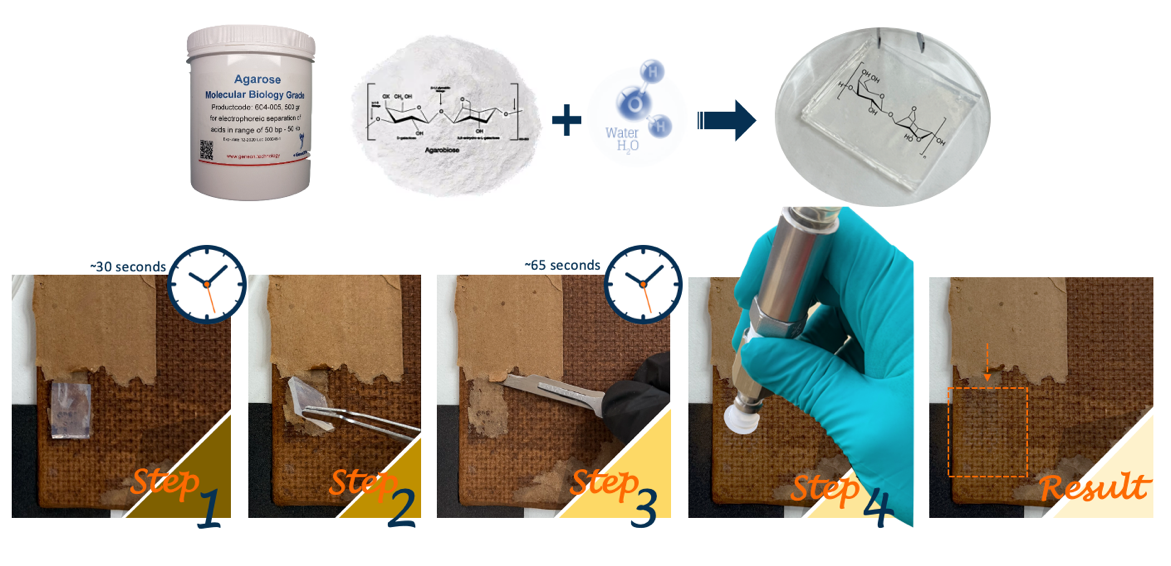
This methodology enables precise modulation of moisture delivery and moisture extraction, thereby limiting swelling-shrinkage phenomena and mitigating the risk of structural and physicochemical alteration of the support. Nevertheless, it should be emphasized that this approach represents only one of several viable strategies for the WAT removal. Alternative approaches include enzymatic treatments, solvent-modified gels, bio-based gels systems [11], and rigid polymeric networks such as PVA-based gels [12], each requiring critical assessment depending on the condition of the substrate and the sensitivity of associated painting materials.
5. What can be concluded from this?
Compared to direct aqueous application, the gel significantly reduced lateral moisture spread and surface disruption. This approach highlights the importance of coupling material-sensitive moisture delivery systems with substrate-specific risk assessment, particularly for hygroscopically active composite supports such as Masonite-type fiberboards.
References
1. Ross, R. Wood Handbook: Wood as an Engineering Material; General Technical Report; Forest Products Laboratory, U.S. Department of Agriculture: Madison, WI, 2021; 543 pp.
2. Katlan, A. W. Early Wood-Fiber Panels: Masonite, Hardboard, and Lower-Density Boards. J. Am. Inst. Conserv. 1994, 33 (3), 301–306. https://doi.org/10.2307/3179639
3. Yuan, T.; Du, W.; Bai, K. et al. Preparation of an Environment-Friendly Fiberboard with High Mechanical Strength Using Delignified Wood Fiber. Vacuum 2022, 196, 110753. https://doi.org/10.1016/j.vacuum.2021.110753
4. Boehm, R. M. The Masonite Process. Ind. Eng. Chem. 1930, 22 (5), 493–497. https://doi.org/10.1021/ie50245a019
5. Otto, S. E.; Woodson, G. Fiberboard Manufacturing Practices in the United States; Agriculture Handbook No. 640; United States Department of Agriculture: Washington, DC, 1986.
6. Rowell, R. M. Handbook of Wood Chemistry and Wood Composites, 2nd ed.; CRC Press: Boca Raton, FL, 2012; 703 pp. https://doi.org/10.1201/b12487
7. Zhiguang, C.; Haixia, Z.; Min, C. et al. The Fine Structure of Starch: A Review. npj Sci. Food 2025, 9, 50. https://doi.org/10.1038/s41538-025-00414-x
8. Chen, Y.; Rao, Y.; Liu, P. et al. Facile Fabrication of a Starch-Based Wood Adhesive Showcasing Water Resistance, Flame Retardancy, and Antibacterial Properties via a Dual Crosslinking Strategy. Int. J. Biol. Macromol. 2024, 282 (Part 4), 137180. https://doi.org/10.1016/j.ijbiomac.2024.137180
9. Sansonetti, A.; Bertasa, M.; Canevali, C. A Review in Using Agar Gels for Cleaning Art Surfaces. J. Cult. Herit. 2020, 44, 285–296. https://doi.org/10.1016/j.culher.2020.01.008
10. Duncan, T. T.; Sullivan, M. R.; Hughes, A. E. et al. The Role of Adsorption in Agarose Gel Cleaning of Artworks on Paper. Gels 2025, 11 (12), 965. https://doi.org/10.3390/gels11120965
11. Lee, C.; Fiocco, G.; Vigani, B. et al. Retentive Bio-Based Chemical Gel for Removing Glues from Water-Sensitive Wooden Artworks. J. Cult. Herit. 2024, 68, 9–16. https://doi.org/10.1016/j.culher.2024.05.005
12. Caretti, E.; Bonini, M.; Dei, L. et al. New Frontiers in Materials Science for Art Conservation: Responsive Gels and Beyond. Acc. Chem. Res. 2010, 43 (6), 751–760. https://doi.org/10.1021/ar900282h